









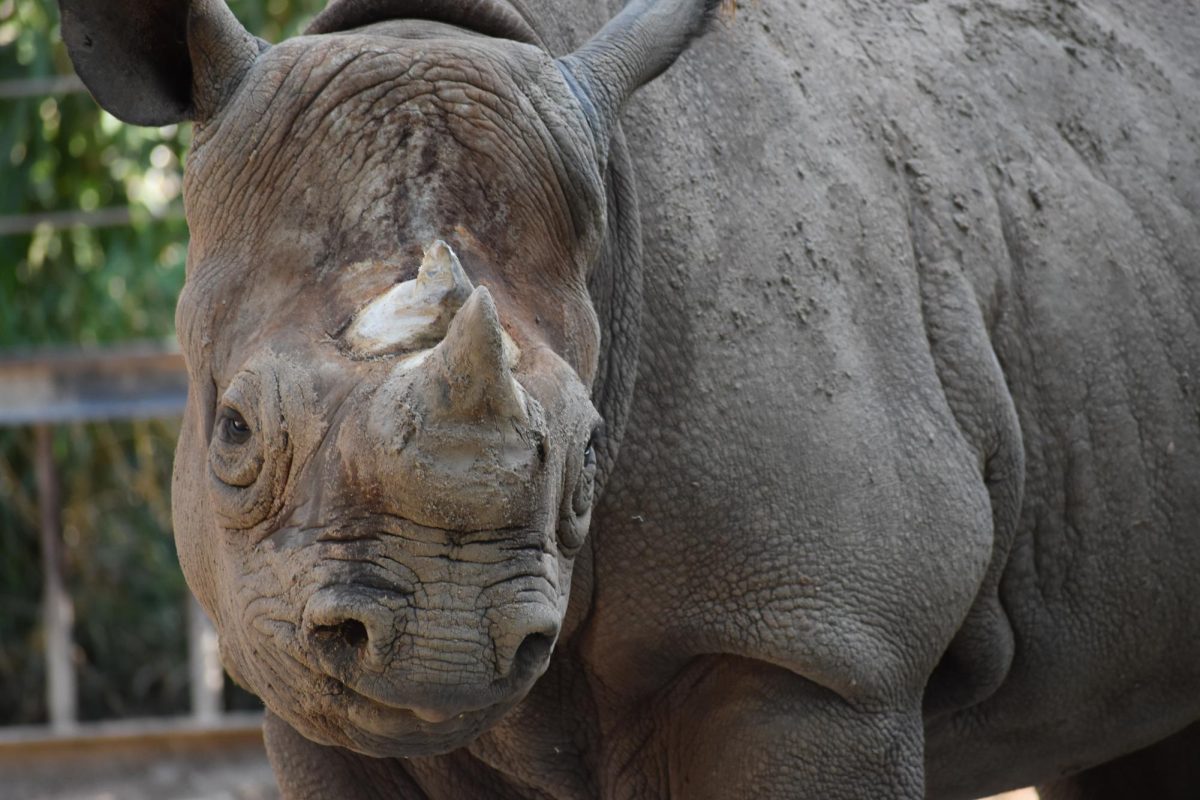
On Friday July 11, zookeepers at Lee Richardson Zoo (LRZ) entered the Rhinoceros barn to a startling sight. Jabari, the zoo’s oldest Black Rhino, had passed away during the night. Jabari had no previous conditions that would have led to his death, and some investigation revealed the cause. Jabari and his son Ayubu had been placed into the barn for the night due to the possibility of storms. Sometime during the night Ayubu was able to push past the gate that separated them, and the resulting confrontation resulted in the death of Jabari. Speculation emerged as to what was to blame for the accident. Did a zookeeper forget to properly lock a gate? Could any gate stop a 2000 pound Rhinoceros if it really wanted to break through?
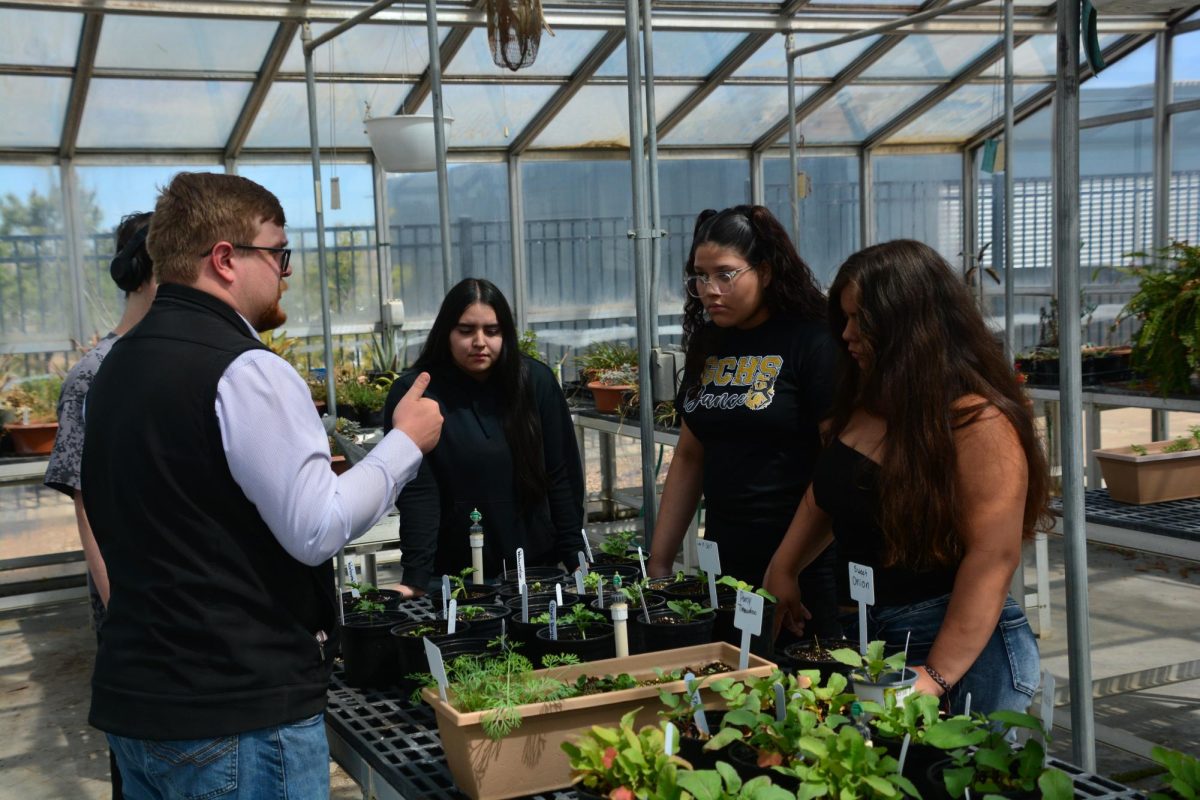
“When you have large males that are competing over a female it’s pretty difficult to keep them separated,” Lucas Moll, Zoology teacher, said.
Moll brings up that the presence of the female Rhino Johari could have triggered the competitive nature in the two males and incited the confrontation. Male Rhinos in the wild often fight for the rights to mate with females and this instinct is encoded in all rhinos.
“Rhinoceros are a very powerful animal, if they really want to get through something and they’re persistent enough, it’s going to take a lot to stop that,” Moll said.
Following the incident, the zoo submitted a report to the Association of Zoos and Aquariums (AZA). This association is in charge of the captive breeding programs that LRZ participates in. Black Rhinos are critically endangered, making the death of Jabari a much larger concern, especially when it comes to genetic diversity.
“A male lost is genetic diversity lost, a female would be numbers. Both are important, but for critically endangered, the male loss is less of an impact in my opinion,” Moll said.
For captive breeding programs when a species is critically endangered, inbreeding becomes an important obstacle to navigate. Zoos want to avoid the possibility at all costs, so animals are carefully checked for relations before being matched for breeding. The loss of even a single member of an endangered species shrinks the gene pool, and makes inbreeding a bigger threat. However females are even more important in these scenarios, as they are the ones who carry and give birth. LRZ still possesses Johari and her son Ayubu, and questions remain as to whether new rhinos will be brought in to breed with either animal.
“My suspicion with AZA is that it may hurt their ability to procure other critically endangered species. If they’re on a waiting list for an animal it probably drops them down a few spaces,” Moll said.
It remains to be seen if any new information will be released, and how AZA will respond to the death of Jabari.
An official statement of the incident can be found on LRZ’s Facebook page. The end of the statement reads “We thank Jabari for his vital role in the AZA’s Species Survival Plan for Eastern Black Rhinoceros and for fostering connections with zoo guests of all ages that helped bring awareness to his critically endangered species.”